Tokyo Home Assistant Community Day Meetup
Last week, I attended the Home Assistant Community Day Meetup and met lots of home automation and self-hosting geeks like myself. Only a few months ago, I managed to go to the first Home Assistant meetup in Sydney, and this year I found myself at a second Home Assistant meetup in my hometown Tokyo!
This was a pretty sophisticated meetup as meetups go, there was lots of cool swag, including ESP32's from seeed studio, Home Asssitant branded totes, socks and even some giveaways of real IoT smart home devices!
The whole meetup was in Japanese, and it was fun to interact with several Japanese developers and home automation enthusiasts. About 30 or so people attended and everything ran really smoothly!
Echonet Lite is a very popular home automation protocol in Japan. Most network connected home appliances, solar power systems and hot water systems all speak this protocol, a UDP based protocol that broadcasts on the network. Many home subsidies around solar panels and batteries are predicated on the device supporting this protocol so it can be controlled by Home Energy Management devices (HEMS). If you want to get a subsidy in Japan for a house with renewable or smart energy systems, it must support HEMS. It is the reason why Tesla Powerwall 2 was not a popular option in Japan because it did not speak the Echonet Lite protocol (something that Powerwall 3 has rectified.)
My Home Assistant setup uses an add-on called Echonet Lite Platform Custom Component for Home Assistant. When I installed Home Assistant, it was the only integration that allowed me to connect to Echonet Lite. This includes all my blinds (18), light switches (20), air conditioners (5), hot water system, solar system, battery system and a few other minor appliances.
I remember it took a while to get working, but generally it has been pretty solid. The hardware has been more flakey than the Home Assistant software!
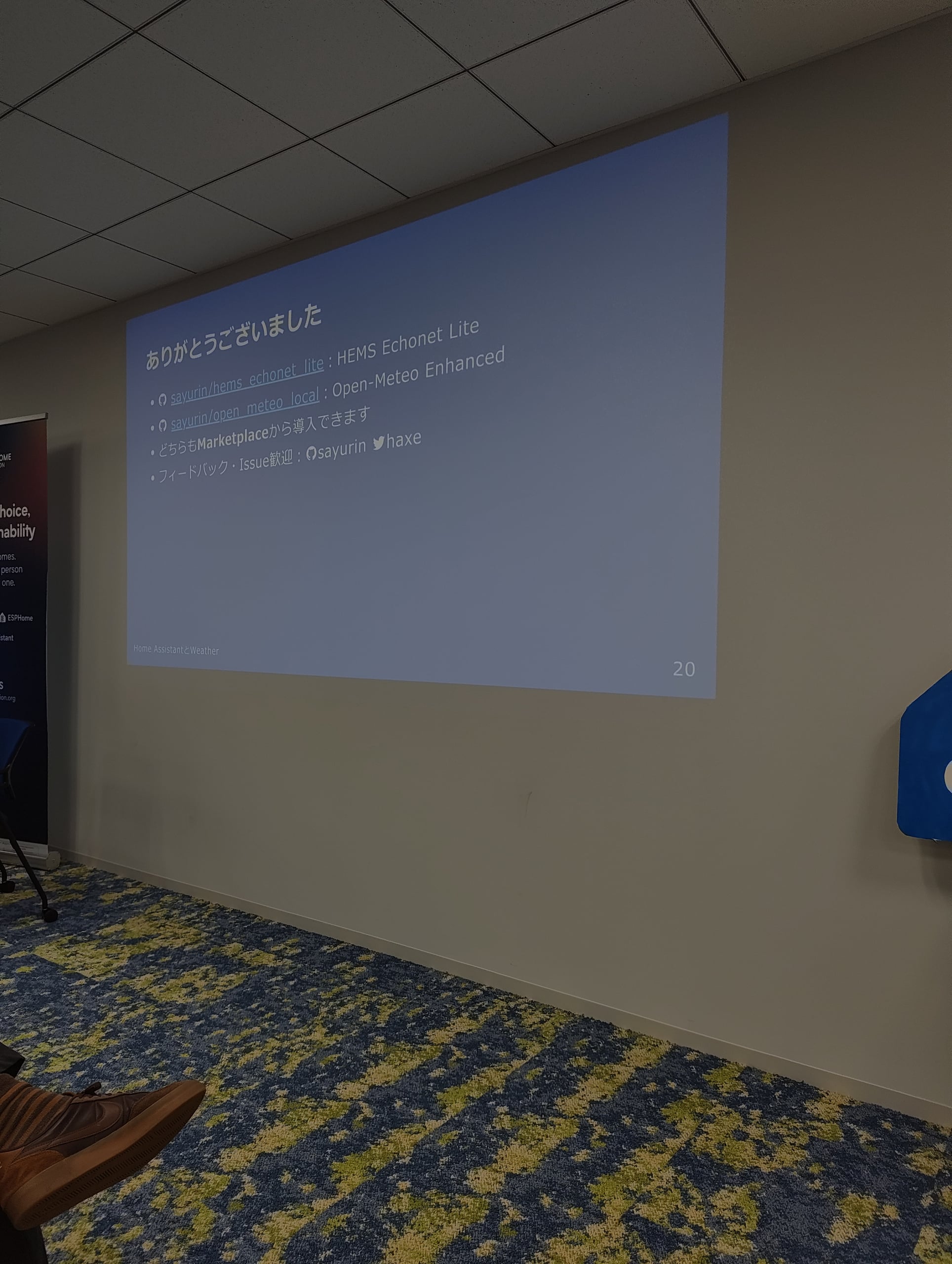
At this meetup, the author of another Echonet Lite integration, Sayurin gave a talk to introduce his system. The main difference being something that I had wondered about, how the Echonet Lite identifies devices, and what happens when the IP address changes if through a DHCP lease expiry. I'm keen to migrate to a different integration if it is more resilent to these changes.
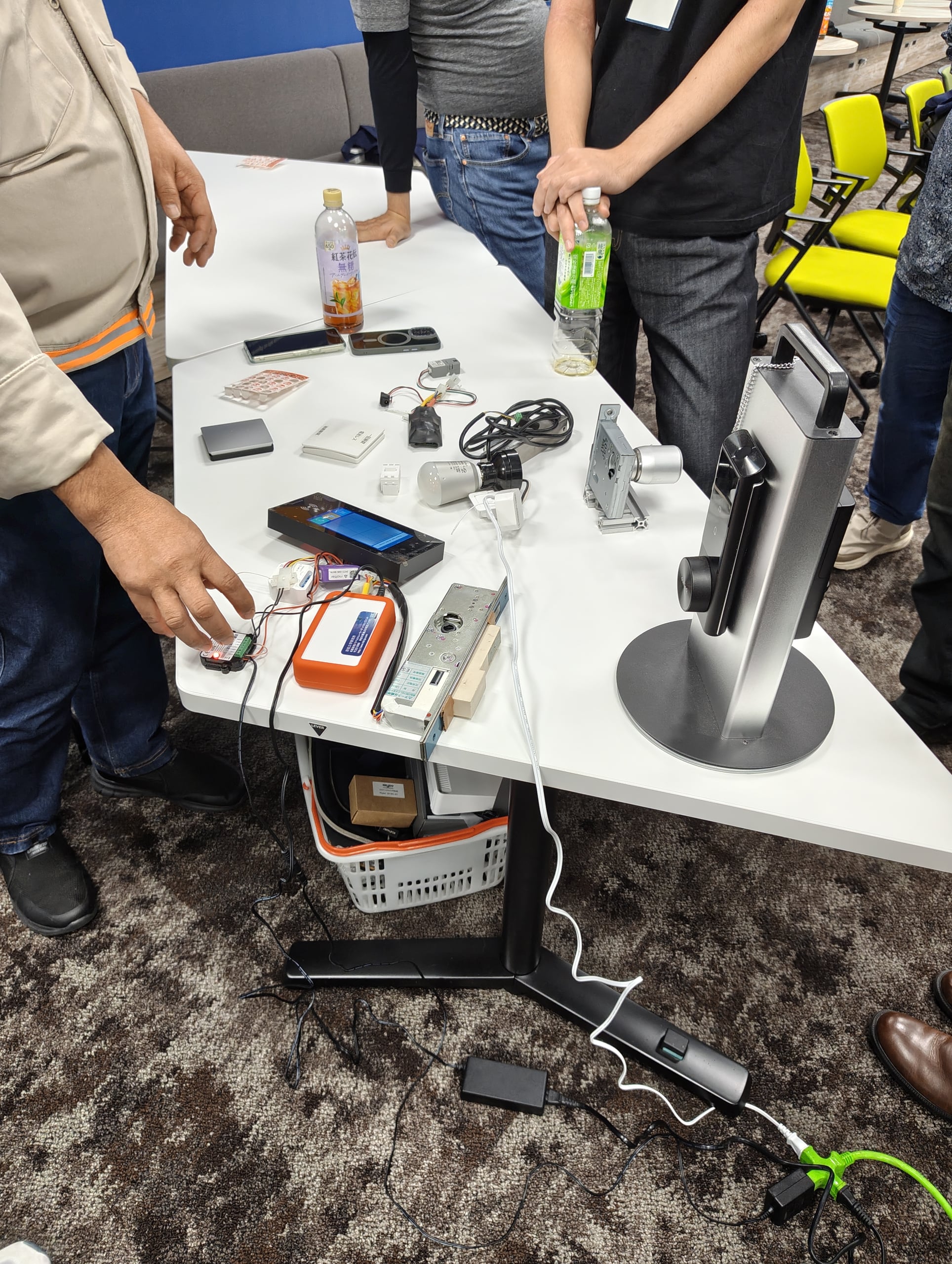
Another fun thing has been people trying to use Home Assistant to automate smart locks. There are obviously attachments like SwitchBot or Sesame in Japan which can be attached to a lock on the backend and controlled by a phone. My front door lock is by a Japanese company called Claris and they have an electronic lock through NFC and physical keys, but no network integration. At least none that I can figure out.
Unfortunately, using these lock attachments are not generally possibly with the shape and configuration of this lock. At a trade show recently, I found out that the lock company is making a Matter compatible lock, but it is not on the market, nor is it clear whether I can "upgrade" the lock on my front door.
One person gave a talk about automating his apartment's door lock by jerry-rigging Home Assistant over Matter and a SIP connection through their apartment's intercom so that if he called his own intercom it would recognize and automatically open his lock. Actually it wasn't that sophisticated, he had a Home Assistant dashboard that would have a big switch that he could flip and it would cause Home Assistant to trigger a matter signal to open the building door.
Another person gave a talk about different types of locks, and bought physical locks and showed how fast and slow they could be.
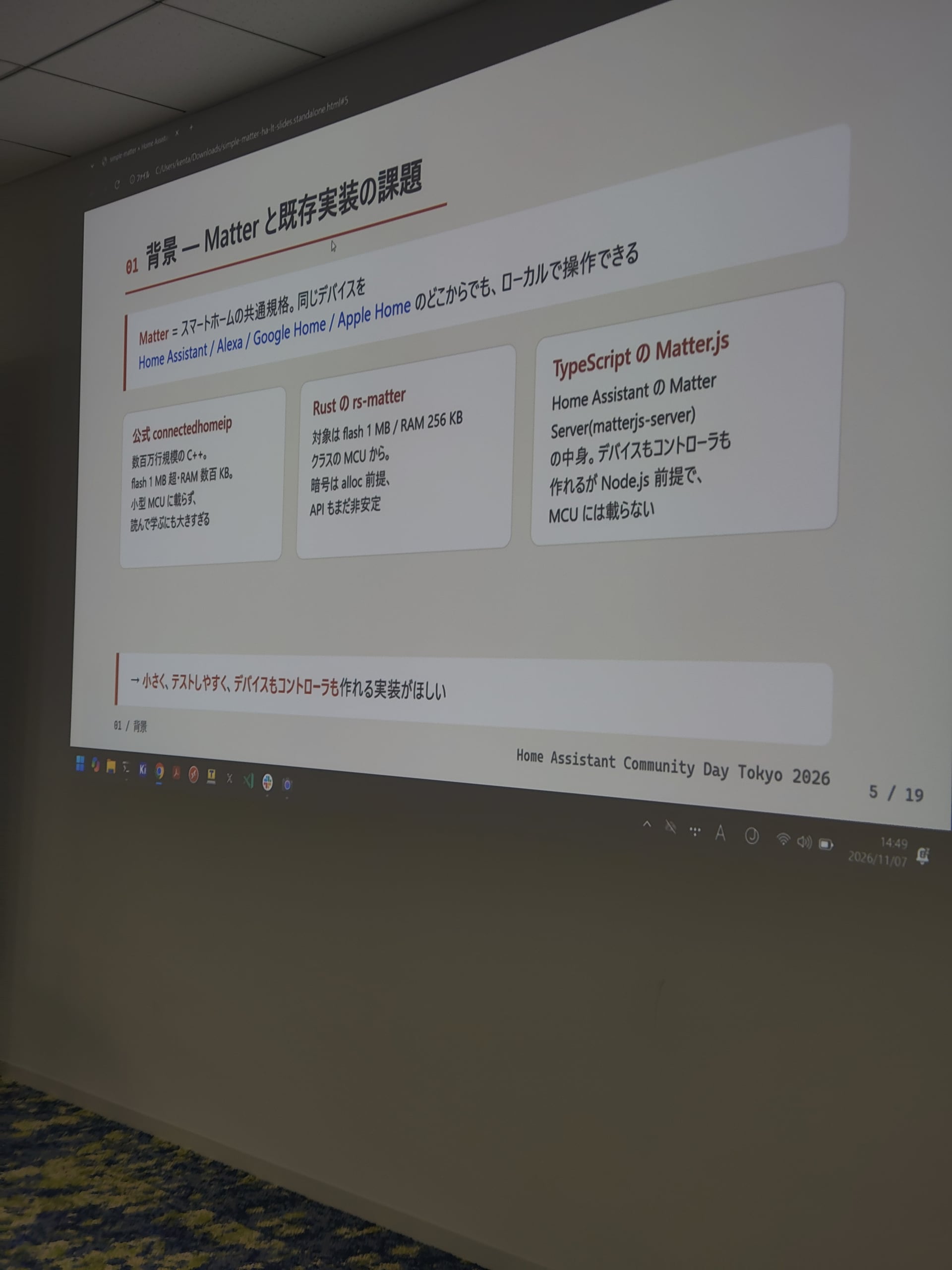
Other talks included overview of Seeed Studio products in Japan (sponsor), and a person from Nature Remo who was talking about how they got Nature Remo to be an officially supported device on Home Assistant, but his main talk was about creating an IoT device by implementing Matter protocol on Rust and getting it to run on very basic hardware.
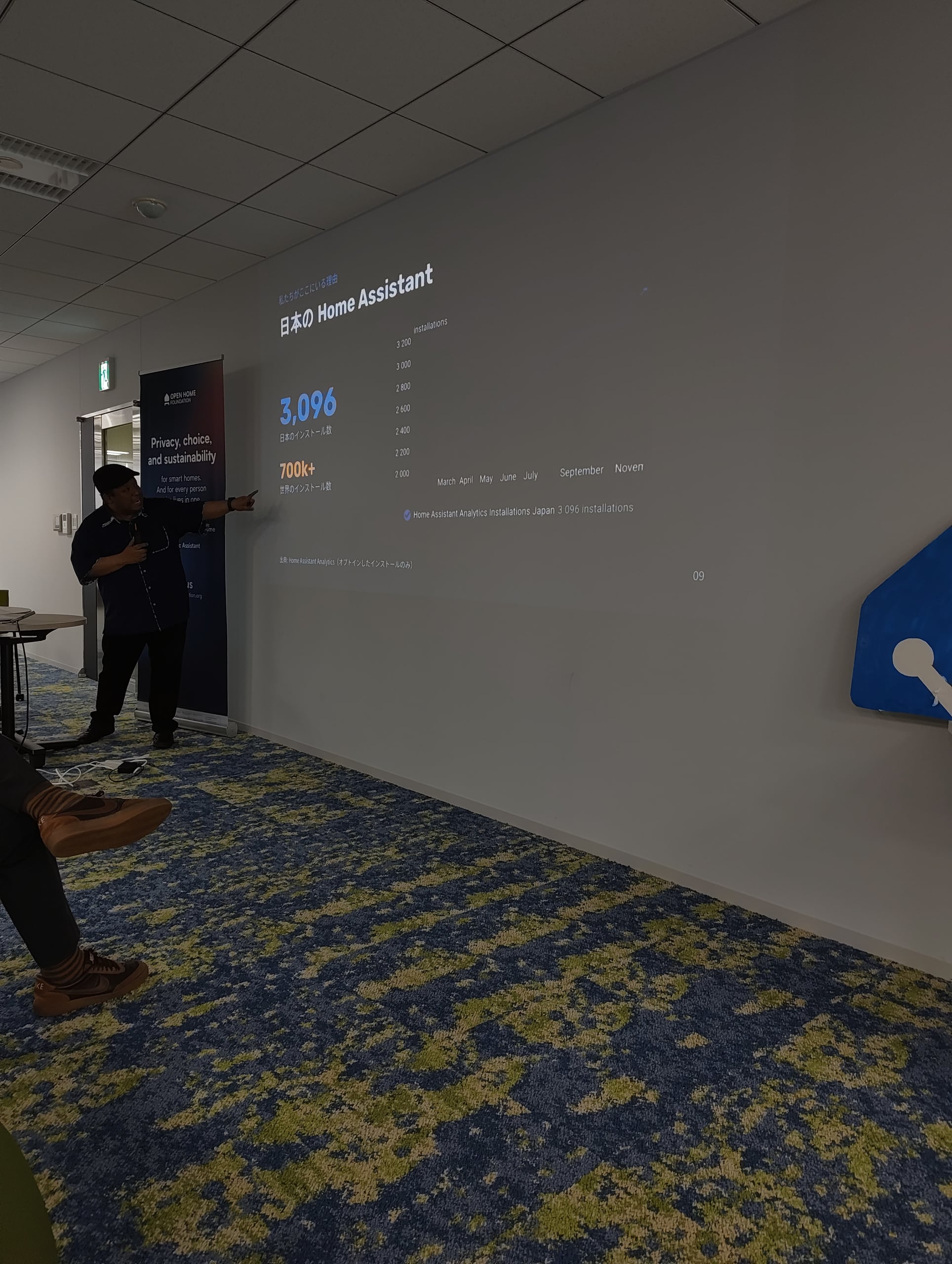
One surprising thing about Home Assistant in Japan was how few installations there were. While the numbers are only opt in, of the 700K installations that have opted in to report their region, only 3000 are from Japan. There is a long way to go to get Home Assistant more popular, even amongst enthusiasts in Japan.